1
What made Milo hold his breath?
C. The text says: ‘Upstairs, a bed creaked. He held his breath.’ The creak told Milo someone might be waking up — and the whole operation was a secret.Go back and check
Four short texts and twenty-four questions — with a clock quietly on your side. Real papers are rarely lost at the start; they are lost in the second half, when tired guesses replace going back to the text. This set measures exactly that, and shows you.
Every question below trains one of these. After you answer, the badge names the habit — and at the end you get a score for each, plus your first half against your second.
If a question asks about a detail — a number, a job, a reason — the answer is printed in the text. Never answer from memory: find the line, put your finger on it, then choose.
Some questions flip: 'Which is NOT…', 'all of the following EXCEPT…'. Read the question twice and circle the NOT in your head. Three options will be true — the true-sounding ones are the trap.
Capitals, italics, a one-word line, an expert's report, a question to the reader — none of it is decoration. Ask: what does this make the reader feel, picture, or believe?
Preposition, noun group, and phrases that tell you how / where / when. Test them: a preposition starts a 'where-or-when' chunk; a noun group is a thing with its describing words; 'like a…' usually tells you how.
A hard word always has clues around it — often in the same sentence. Read the words just before and after, and swap each option into the sentence to hear which one fits.
Read each text once, all the way through, before its questions. If a question asks about a detail — go back. Every time. That is the whole trick, and it works just as well at question 24.
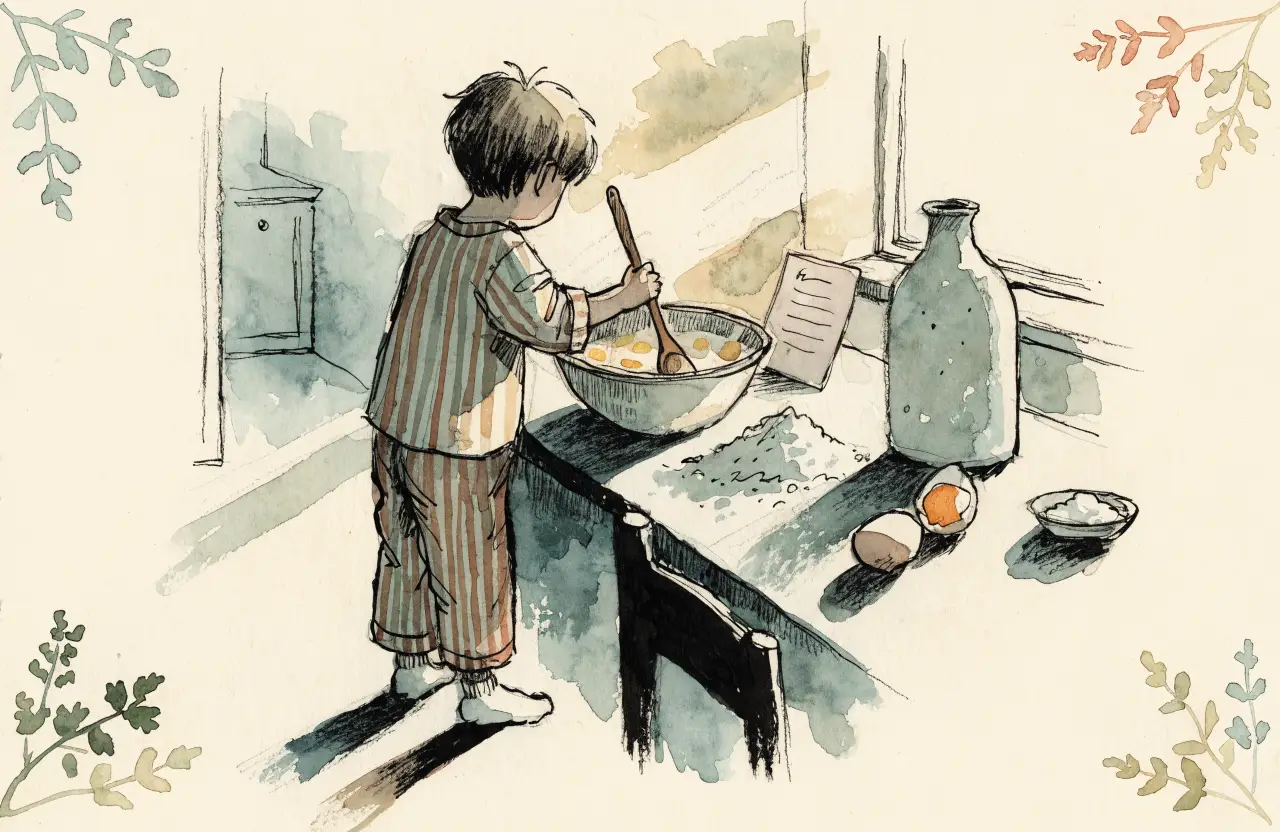
Milo had been planning Operation Pancake for a week. On Sunday he woke before anyone else, tiptoed down the stairs and into the kitchen, and closed the door without a sound.
The recipe card said two eggs, one cup of flour and a splash of milk. Milo followed it methodically, ticking off each line with a pencil before he moved to the next. Crack, whisk, pour. So far, Operation Pancake was going perfectly.
Then the cat jumped onto the bench.
SPLAT.
The first pancake slid off the pan and landed flat on the floor. Milo froze. Upstairs, a bed creaked. He held his breath and counted slowly to ten. Silence again. He let the breath out and started over. This time he poured slowly, tipping the pan in small circles the way Dad did.
The second pancake came out golden — well, golden with one dark brown corner. Milo hid the corner under a strawberry and carried the plate upstairs.
Mum sat up. She looked at the wonky pancake, at the sticky floor Milo had not quite cleaned, and at the flour in his hair. ‘This,’ she said, ‘is the best breakfast anyone has ever made me.’
What made Milo hold his breath?
C. The text says: ‘Upstairs, a bed creaked. He held his breath.’ The creak told Milo someone might be waking up — and the whole operation was a secret.Go back and check
Why is the word SPLAT written in capital letters, on a line of its own?
C. Everything before it is quiet and careful — tiptoeing, a closed door, ticking off lines. The capitals crash into that quiet the way the pancake crashed onto the floor. Big or unusual lettering is nearly always about how the moment should feel.Why the writer did it
‘Milo followed it methodically, ticking off each line with a pencil before he moved to the next.’
What does methodically mean?
A. The sentence explains itself: he ticks off each line before moving to the next. That is one step at a time, in order, with care. The clue for a hard word is usually sitting right beside it.Word detective
‘tiptoed down the stairs and into the kitchen’
The highlighted words down and into are both
D. A preposition sits in front of a noun and tells you where (or when) something happens: down the stairs, into the kitchen. If the word starts a where-chunk and a thing follows it, it is a preposition.Grammar names
What did the recipe card say Milo needed?
B. Paragraph two lists it exactly. Questions like this are free marks if you go back — and traps if you trust your memory, because every wrong option here is the same list with two words quietly swapped.Go back and check
The story ends with Mum’s words, not Milo’s. Why is her sentence a good ending?
D. Mum looks straight at the wonky pancake, the sticky floor and the flour — and then calls it the best breakfast ever. The writer lines up the flaws first so her verdict means: the love and effort are what she is tasting. That is the point of the whole story, landed in one line.Why the writer did it
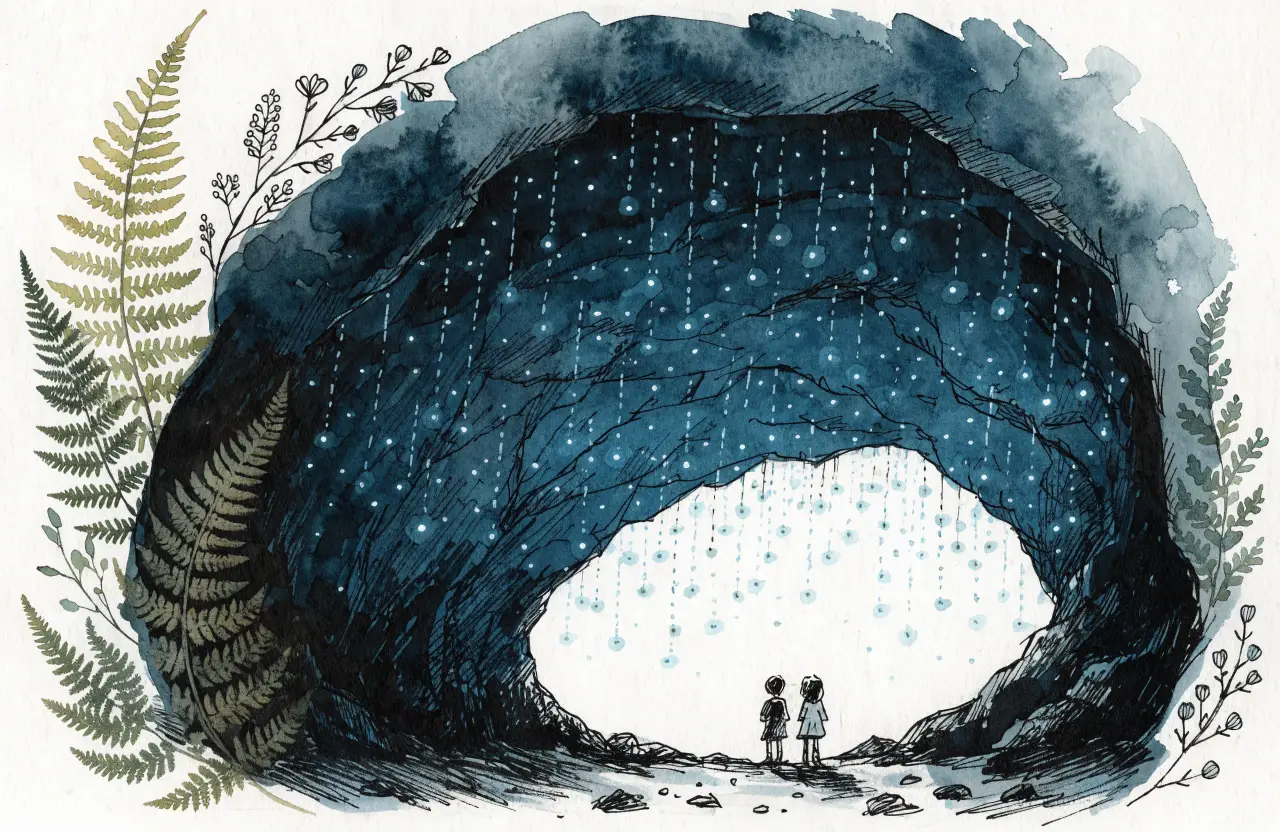
Deep inside some New Zealand caves, the ceiling looks like a night sky crowded with tiny blue-green stars. The ‘stars’ are glow-worms — and they are not worms at all. A glow-worm is the young form, or larva, of a small fly called the fungus gnat.
Each larva makes its light inside its tail. The light is not for decoration. Hungry, and stuck in one place on the cave ceiling, the larva uses its glow as a lure: flying insects mistake the little light for the open night sky and fly straight towards it.
That is when the trap works. Around its nest the larva hangs dozens of sticky silk threads, each one beaded with drops of glue. An insect that flies at the light blunders into the threads and sticks fast. The larva then hauls the thread up like a fishing line and eats its catch.
The brighter the light, the better the trap works. Hungry larvae actually glow more brightly than well-fed ones — the opposite of what most visitors expect.
Glow-worms are fussy about where they live. They need damp air, still darkness and a ceiling to hang from, which is why caves and shaded stream banks suit them so well. In bright, dry or windy places the silk threads dry out — and the trap fails.
Which of the following is NOT something a glow-worm larva does?
D. The larva is ‘stuck in one place on the cave ceiling’ — it is the insects that fly towards the light. In a NOT question the three true options are the trap: if an option sounds right and you can find it in the text, that is exactly why it is not the answer.Spot the NOT
According to the text, what is a glow-worm?
B. Paragraph one says glow-worms ‘are not worms at all’ — each one is the larva of a fly called the fungus gnat. When a question starts ‘According to the text’, only the text’s definition counts, not the name’s.Go back and check
Why does the writer begin by describing the cave ceiling as ‘a night sky crowded with tiny blue-green stars’?
D. A ceiling of glowing larvae is hard to imagine; a starry night sky is easy. Writers open with a familiar picture so the strange new thing lands instantly. When a text starts with a comparison, ask what it lets you see.Why the writer did it
‘An insect that flies at the light blunders into the threads and sticks fast.’
What does blunders mean here?
A. The insect has been fooled — it thinks the light is the open sky, so it flies in blind and hits the threads it never saw. ‘Blunders’ carries that clumsiness. The sentence around a hard word almost always acts out its meaning.Word detective
‘The larva then hauls the thread up like a fishing line.’
The words like a fishing line tell us
C. ‘Like a fishing line’ paints the manner of the action — slowly, hand over hand, reeling in a catch. A ‘like a…’ phrase almost always answers how. Test each option as a question against the phrase; only one gets an answer.Grammar names
Glow-worms need all of the following EXCEPT
D. The last paragraph lists their needs — damp air, still darkness, a ceiling — and then says the opposite kills the trap: in bright, dry or windy places the threads fail. An EXCEPT question is a NOT question wearing different clothes; the method is identical.Spot the NOT
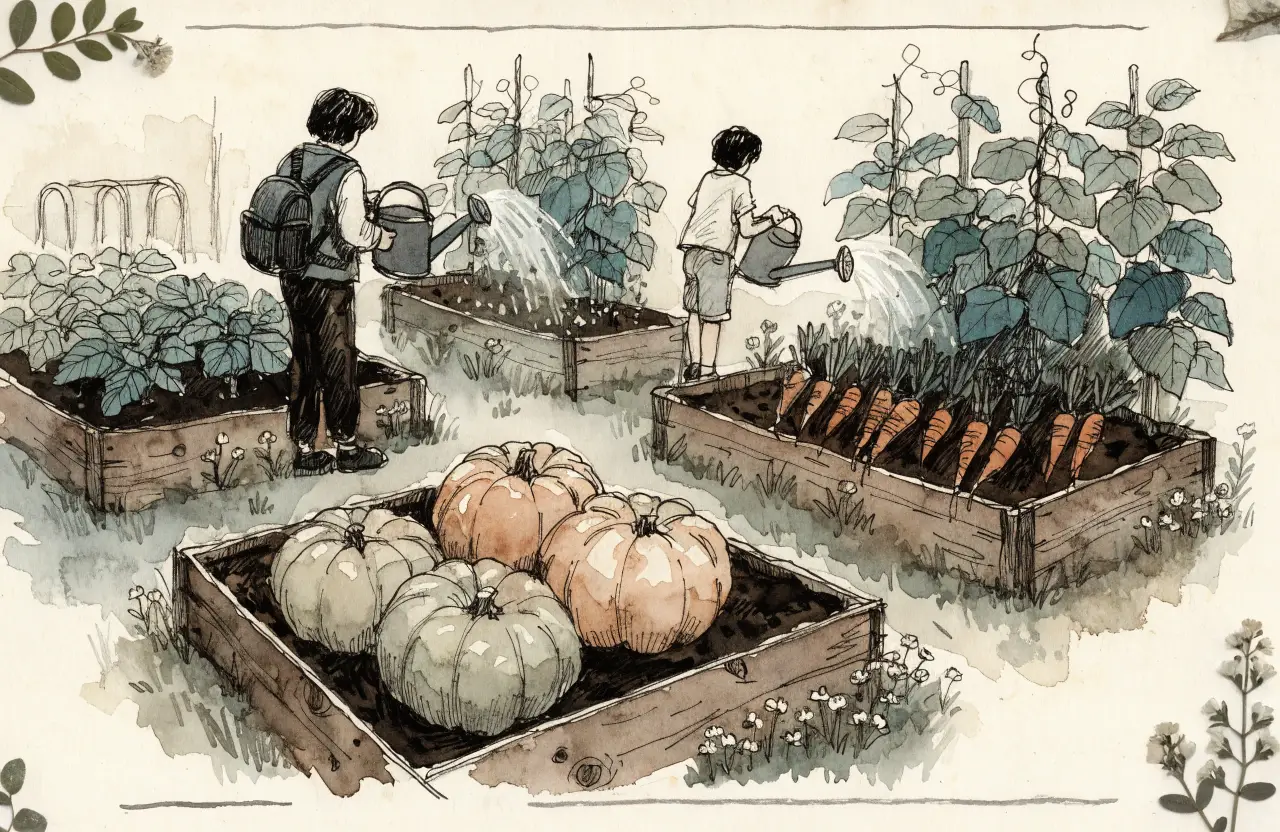
Next term, our school may replace the vegetable garden with a second bike rack. Before anyone reaches for a shovel, it is worth remembering what the garden actually does.
Start with lunch. Last year the garden grew 47 kilograms of vegetables, and every single kilogram went into the canteen’s soup pot. Students who had never tasted a broad bean in their lives lined up for seconds.
Then there is what the garden teaches. Some call a garden a frivolous use of school land — fun, maybe, but hardly serious. Watch it for a week and you will see the opposite. Looking after a bed of seedlings is slow work. You water, you wait, you weed, you wait some more. In a world of instant everything, the garden is the one place in school where patience is not just praised — it is required.
Some people call the garden messy. They are right. It is messy the way a workshop is messy: because real work happens there.
A second bike rack would be tidy, certainly. It would also be pointless. The first rack has never once been full — count the empty spaces any morning you like.
So before the shovels come out, walk past the garden at lunchtime and count the students. Then walk past the bike rack and count again. The garden is not spare land. The garden is the busiest classroom we have.
According to the text, what happened to the vegetables the garden grew last year?
C. ‘Every single kilogram went into the canteen’s soup pot.’ The next sentence even shows students lining up for seconds — the opposite of refusing. One finger on the line beats a confident memory.Go back and check
‘patience is not just praised — it is required.’
Why is the word required in italics?
A. The sentence builds a step up: praised is nice, required is stronger — and the italics are the writer leaning on that stronger word, the way your voice would. Italics for stress say: this is the word that carries the point.Why the writer did it
‘Some call a garden a frivolous use of school land — fun, maybe, but hardly serious.’
What does frivolous mean?
A. The dash is doing the dictionary’s job: ‘fun, maybe, but hardly serious’ IS the meaning of frivolous. Writers often gloss a hard word immediately — a dash or a comma after a tricky word is worth reading twice.Word detective
‘the canteen’s soup pot’ is a noun group — a thing plus its describing words.
Which of these is also a noun group?
D. ‘A second bike rack’ is a thing (rack) wearing its describers (a, second, bike) — it slots into ‘I can see ___’ perfectly. The others fail the test: one is an action with a place, one is a lone adverb, one is a verb chunk.Grammar names
Why does the writer say a second bike rack would be ‘pointless’?
C. The next sentence delivers the evidence: ‘The first rack has never once been full — count the empty spaces any morning you like.’ When a writer drops a strong word like ‘pointless’, the proof is nearly always parked right beside it.Go back and check
The text ends: ‘walk past the garden at lunchtime and count the students. Then walk past the bike rack and count again.’
Why does the writer end by asking readers to count for themselves?
B. The writer is sure the garden will be crowded and the rack empty — so instead of claiming it, they hand the reader the experiment. Evidence you collect yourself is the most convincing kind, and persuasive texts love to end on it.Why the writer did it
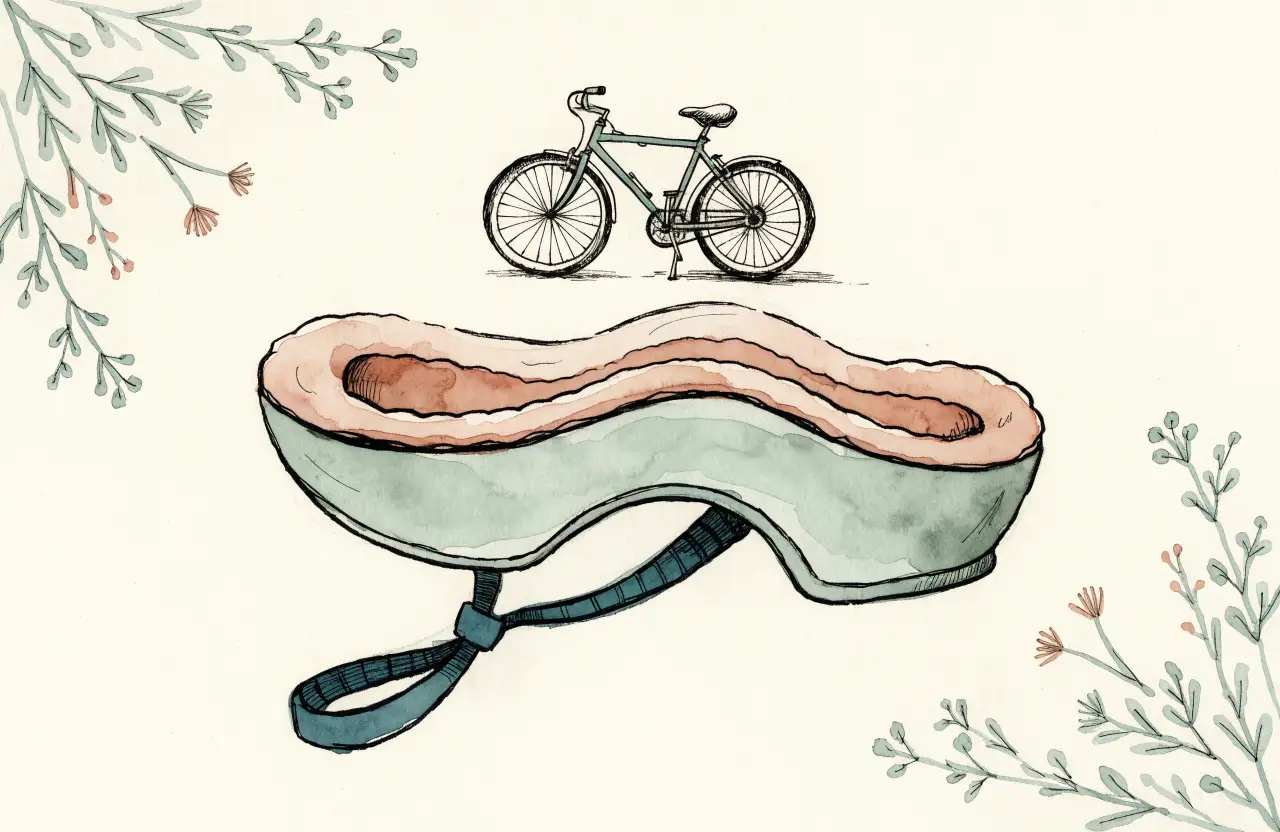
A bike helmet looks simple: a shiny shell, a layer of foam, a strap. But that quiet layer of foam has one job, and it does the whole job in less than a second.
When a helmet hits the road, the foam crushes. Crushing sounds like failure — it is actually the whole point. As the foam squashes down it absorbs the force of the knock, spreading it out and slowing it down before it reaches your head. The shell’s job is different: it is smooth and slippery on purpose, so the helmet skids along the ground instead of catching and jerking your neck.
This is why a helmet that has done its job once must be replaced. The foam does not spring back. A crushed helmet can look perfectly fine on the outside while the protection inside is already spent.
Safety testers at one laboratory reported that wearing a helmet cuts the risk of serious head injury by more than half. In the lab, the testers watch every crash test intently, frame by frame, never looking away, to see exactly where the foam crushes.
So look after the hardest-working hat you own. Do up the strap — a loose helmet slides out of place just when you need it most. Keep it out of hot cars, because heat weakens the foam. And if it ever takes a real knock, thank it — then replace it.
Which of the following is NOT a reason the text gives for replacing a helmet after a crash?
B. The slippery shell is a design feature — it is smooth on purpose so the helmet skids instead of jerking your neck. The other three all describe the spent foam, which is the real reason for replacement. This NOT question hides its answer by taking a true fact and flipping its meaning.Spot the NOT
According to the text, what is the job of the helmet’s shell?
C. ‘The shell’s job is different: it is smooth and slippery on purpose, so the helmet skids along the ground instead of catching and jerking your neck.’ The trap here is the foam’s job dressed up as the shell’s — two right facts, wrong owner.Go back and check
Why does the writer include what the safety testers reported?
B. A writer can claim helmets work; a laboratory can show it — ‘cuts the risk of serious head injury by more than half’ is a measured fact from people whose job is testing. Quoting experts turns an explanation into something you can trust. Texts bring in reports for exactly this reason.Why the writer did it
‘the testers watch every crash test intently, frame by frame, never looking away’
What does intently mean?
B. ‘Frame by frame, never looking away’ is the meaning acted out: eyes locked on, nothing missed. Intently = with full attention. Its opposite would be a bored or dreamy glance — worth remembering, because tests love asking for this word’s antonym too.Word detective
‘the helmet skids along the ground instead of catching’
The words along the ground tell us
A. ‘Along the ground’ names a place — the ground — so it answers where. Compare question 11: ‘like a fishing line’ had no place in it, so it told you how. Same question, different answer: that is why you test the phrase instead of memorising a rule.Grammar names
The final paragraph tells readers to do all of the following EXCEPT
A. Strap, hot cars, replace after a knock — all three are right there in the final paragraph. Washing the foam never appears. By your fourth flipped question in this set, the method should feel automatic: find three, and the fourth is your answer.Spot the NOT
Do the whole set first — the split report only means something if the clock ran honestly.
Why did the writer do that? — the seven moves →
Which line proves it? — evidence & comparison →